
Last updated:
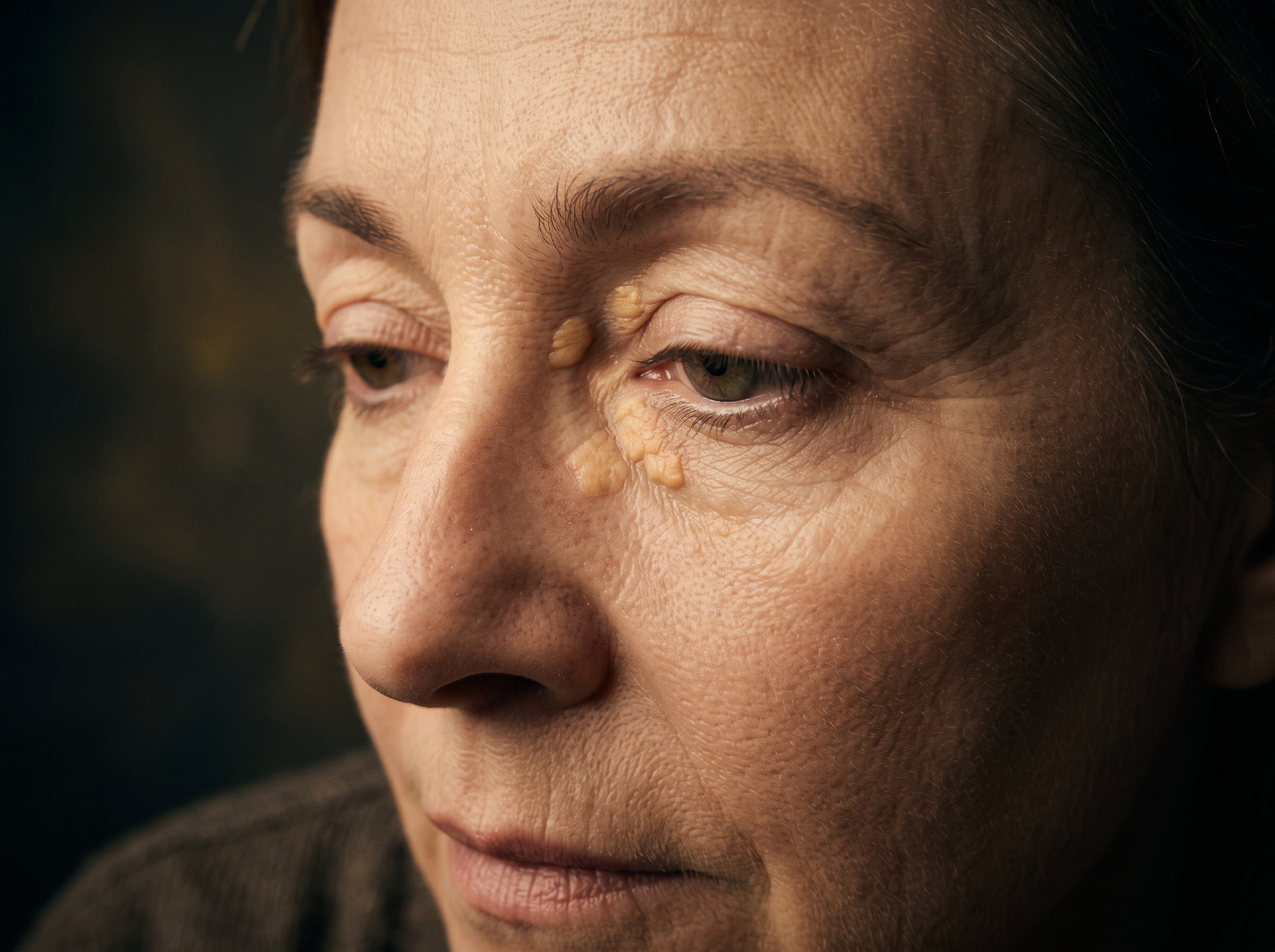
Yellow patches around the eyelids may be xanthelasma. Their association with blood lipids matters, but they do not automatically mean that cholesterol is high. An examination confirms the diagnosis and guides any tests or treatment.
What is xanthelasma?
These fatty deposits form yellow patches in eyelid skin, often beside the nose, on one or both sides. They usually grow slowly without pain. Xanthelasma is benign, not cancer, but not every eyelid lump is xanthelasma; diagnosis needs an examination.
Reference: StatPearls: Xanthelasma assessment
What causes it? Does it always mean high cholesterol?
Lipids, including cholesterol, accumulate in cells within the skin. Some cases are associated with abnormal blood lipids or a family predisposition; others occur despite normal lipid levels.
The appearance cannot establish the cause in an individual patient or prove that a particular food caused the patches. Lipid assessment and personal and family medical history are more useful than assumptions.
Reference: DermNet: Xanthomas and xanthelasma
Which checks may be appropriate?
A clinician may request cholesterol and triglyceride tests, selecting blood sugar, thyroid or liver tests according to the findings; not everyone needs every test. An uncertain diagnosis may warrant a biopsy. The patches alone do not diagnose heart disease, but provide an opportunity to review risk factors.
Reference: StatPearls: Xanthelasma assessment
Does it need removal? What are the options?
Removal is not required in every case. If appearance is a concern, options depend on the patches’ size, depth and location, skin characteristics and eyelid condition. No single technique is best for everyone.
- Surgical removal in suitable cases.
- Laser treatment for selected lesions.
- Other techniques, such as radiofrequency or a medical chemical peel, when a clinician considers them appropriate.
Reference: A Practical Review of Xanthelasma Management (2023)
Can the patches return?
Patches may recur or new ones develop after successful removal. Treatment can cause pigment changes or scarring, and some procedures can affect eyelid position. Appropriate selection and follow-up matter.
Managing high blood lipids, when present, is important for general health but does not guarantee that existing patches disappear or that recurrence is prevented. Healing time and the number of sessions vary with the procedure and individual case.
Reference: Xanthelasma: Treatment and Recurrence Review (2018)
Can I treat it at home?
Do not squeeze or cut the patches, or apply acids or home remedies near the eye. Unsuitable products can cause burns or eye injury. Arrange an assessment before attempting removal.
Reference: Cleveland Clinic: Xanthelasma
Severe eye pain, a hot and painful red eyelid, or a change in vision needs urgent assessment. These are not typical features of uncomplicated xanthelasma patches. NHS: eyelid warning signs
This article is educational and does not replace an examination, establish the cause in an individual patient or guarantee treatment results.